Is Stretching Worth It If You're Not Flexible?
You don't need to touch your toes for stretching to be useful. This Answer covers why gentle stretching is for everybody and how to ease into it.
The short answer
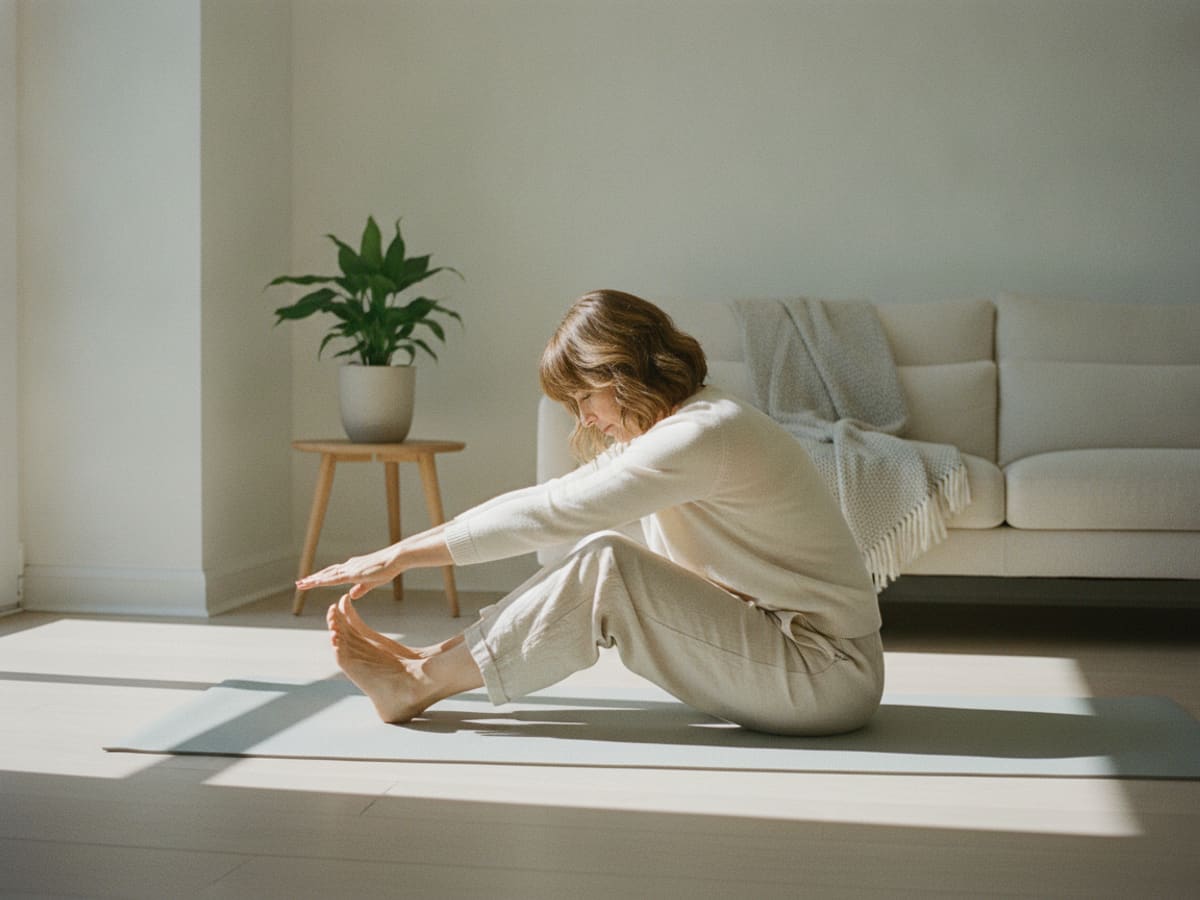
Yes, it's worth it. Stretching isn't a test you pass by touching your toes. It's a way of moving your joints and muscles through their available range, and you can do that from wherever you're starting.
Being able to barely reach past your knees doesn't mean stretching is wasted on you. It just means your starting point is different from someone else's. Many people find that gentle, regular stretching makes everyday movements like bending, reaching, and getting out of a chair feel a little easier over time. How much it helps varies from person to person, and no one can promise a particular result.
What stretching can and can't do
Stretching can be a pleasant way to take a break from sitting, notice where you feel tight, and ease into or out of a walk or workout. It can also help you get used to moving more freely, which many people find motivating on its own.
It also has limits. Stretching isn't a cure-all for aches, and it won't replace strength work, walking, or other movement. Muscles that feel tight aren't always short. Sometimes they're tired, guarded, or simply unused to being asked to move that way. Your body shape matters too. The length of your arms and legs and the way your joints fit together affect how far you can reach, and no amount of effort changes that. Some people will never touch the floor, and that's perfectly normal.
So a better goal than "touch my toes" is "move more comfortably in my daily life." That's something you can notice and measure yourself, with no one else's standard involved.
Gentle stretches that don't need a mat
You can do all of these in regular clothes, in a chair, or standing near a wall. Move slowly and breathe normally. You're looking for mild tension, not strain.
- Seated hamstring stretch: Sit near the front edge of a sturdy chair. Straighten one leg with your heel on the floor and toe pointing up. Sit tall and lean forward slightly from your hips until you feel a gentle pull along the back of your thigh. Switch legs.
- Standing calf stretch: Face a wall with your hands on it. Step one foot back, keep that heel down, and bend the front knee a little. Ease forward until you feel a mild stretch in the back leg.
- Chest opener: Stand in a doorway with your forearm on the frame and your elbow bent. Turn your body gently away until you feel the front of your shoulder and chest open.
- Seated twist: Sit tall in a chair, place one hand on the opposite knee, and turn your upper body toward the back of the chair. Keep your hips facing forward. Switch sides.
- Shoulder rolls and neck tilts: Roll your shoulders back and down a few times. Then lower one ear gently toward the same shoulder, without pulling on your head.
If you'd like a simple routine, try this:
- Pick two or three stretches from the list.
- Move into each one slowly until you feel mild tension.
- Hold it while breathing in and out in a relaxed way.
- Come out of the stretch just as slowly, then switch sides.
How to know you're pushing too hard
Stretching should feel like a mild, steady pull that eases as you breathe. If you're tempted to grit your teeth, you've gone too far.
Signs to back off:
- Sharp, pinching, burning, or stabbing pain
- Tingling, numbness, or a "zinging" feeling down an arm or leg
- Holding your breath or tensing other muscles to stay in the position
- Bouncing to get deeper into a stretch
- Soreness that lingers into the next day or makes everyday movements harder
If any of those show up, ease out of the stretch and give your body a rest. Next time, try a smaller range, or skip that stretch for now. Stretching more intensely doesn't make you more flexible any faster, and forcing it can leave you feeling worse.
Checking in with a professional about pain
Mild tightness is common, and many people are fine to explore gentle stretching on their own. But pain is different, and it's worth getting a second opinion rather than stretching through it.
A doctor or physical therapist can look at how you move, ask about your history, and suggest what makes sense for your body. This matters especially if you've had an injury or surgery, have a joint condition, are pregnant, or have been told to be careful with certain movements. They can also help if you aren't sure whether what you feel is normal tightness or something else.
Stretching isn't about how far you can go. If it feels good and helps you move a little more easily, it's doing its job, wherever your fingertips land.